In this episode of “The Ritualistic Life and Murder of Prince” series,we enter the "1999" era that brings great spiritual change, personal drama, and cross-over commercial success for Prince.
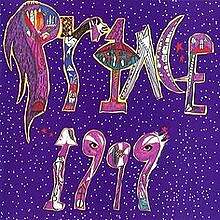
"1999", Prince (1982)
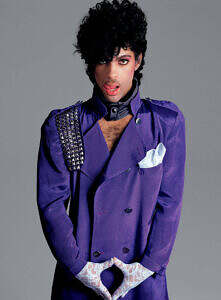
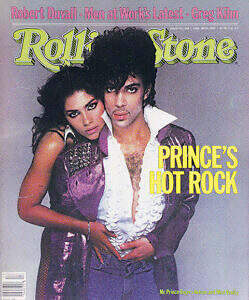
Prince, Rolling Stone, 1983
Tensions run high between Prince and his “Side Groups”
After the “Controversy” tour ended, through Spring and Summer of 1982; Prince was writing and recording his next album, recording, mixing, and mastering “The Time”’s second album, “What Time is It?”, and “Vanity 6”’s debut album. But at the same time, there are hostilities, drama, and even violence building in the relationships Prince had with both his “side groups”: “The Time” and “Vanity 6”.
The Time
On the recent “Controversy” tour, Prince removed “The Time” from the bill in “key” markets on the tour, seemingly out of a fear of “The Time”’s opening act upstaging him and his band. Now that the “Controversy” tour has ended, the built-up tension and resentment between Prince and “The Time” is evident.
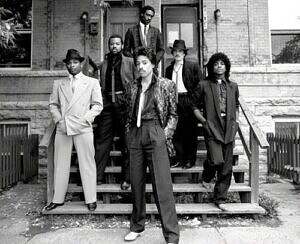
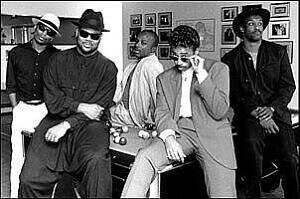
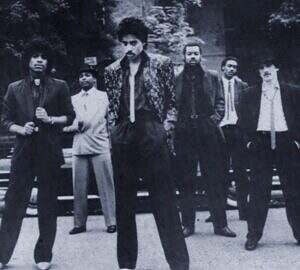
The Time, debut album photo shoot
"The Time" has grown resentful of Prince’s insistence on “total control” of "The Time"’s music and image. "The Time": Morris Day, Jesse Johnson, Terry Lewis, Jimmy Jam, Jellybean Johnson, Monte Moir, and Jerome Benton, is a band full of individually talented musicians, and they just grew tired of being creatively stifled and controlled by Prince.
In Prince’s mind, he was doing what was best for the group, trying to ensure their success.
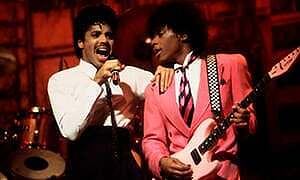
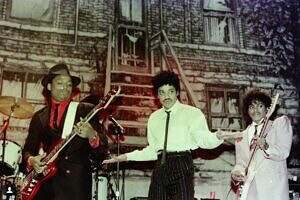
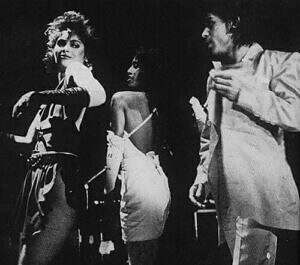
Morris Day and Jesse Johnson onstage with The Time
The Time band members in 1982
Prince felt he was “getting them ready” for where he was trying to take them.
Prince’s process was perceived as “bullying” or "hazing" to "The Time" band members.
But because Prince was so hard on "The Time", they became a live “powerhouse”, not only upstaging Prince on the last tour, but they will continue to outshine Prince on the upcoming “1999” tour.
Vanity 6
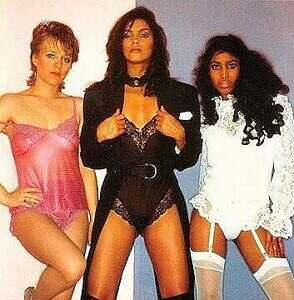
"The Hookers": Loreen Moonsie (Susan's sister), Jamie Shoop, and Susan Moonsie
"Vanity 6", "Nasty Girl" cover photo
We discussed in the last episode, SEGMENT 5: “Controversy” how Prince had developed his all-girl side group “The Hookers” composed of Jamie Shoop, Prince's girlfriend Susan Moonsie, and her sister Loreen Moonsie.
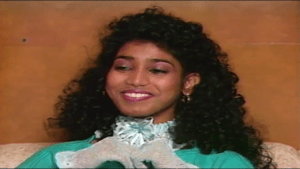
Then, Prince met Denise Matthews and inserted her into the group, dubbed her “Vanity”, and the group became “Vanity 6”. Prince installed Denise Matthews in the group as lead singer and replaced Loreen Moonsie with Scottish singer Brenda Bennett.Brenda, who by the way was married to Prince’s set designer Roy Bennett.Prince’s long-time girlfriend, Susan Moonsie remained in the group.
By the way, Prince originally wanted the all-girl side group to be built around Susan Moonsie, as leader of the group and his girlfriend. But Susan didn’t want to be the lead singer, so Prince installed Jamie Shoop as the original lead, then replaced Jamie with Denise when he began dating her.
Susan Moonsie had been Prince's girlfriend for years, but when Prince started sleeping with several other women, she stepped back from the relationship
We will see throughout the upcoming episodes as we move through Prince’s life and career in the music business, that this is a repetitive pattern in Prince’s life: He becomes romantically interested in someone, then offers them a “group” or a record deal, a spot in the band, or a job in the company, as a means to keep them close and maintain control over them.
In the “Prince’s Spiritual Life and Journey” series, we explore the “karmic patterns and relationships” that showed up in Prince’s life and career, and discuss from a “higher perspective”, the true nature and “purpose” of these relationships
Since Prince had begun dating and sleeping with Denise, obviously, this became a problem for Susan Moonsie.
But Susan has known and been involved with Prince since high school, so she understood what she was looking at here with Prince. To her credit, Susan ended her relationship with Prince, remained in the group and even became friends with Denise.
Susan Moonsie, original member of the "girls' groups"
Other “reports” state that Susan remained in the relationship with Prince and the group, until about 1984, when Prince began a relationship with Susannah Melvoin, Wendy Melvoin’s twin sister.
It has been often reported through the years, that Prince wrote “Private Joy” from the 1981 “Controversy” album, and “When Doves Cry” from “Purple Rain” about his relationship with Susan Moonsie.
"The Ritualistic Life and Murder of Prince" Pt 4 SEGMENT 2: "The Prince Album, Tour, and Band"
"The Ritualistic Life and Murder of Prince", Pt 4 SEGMENT 3: "Dirty Mind"
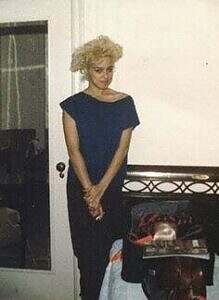
Jill Jones as a teenager, around the time she first met Prince touring with Teena Marie
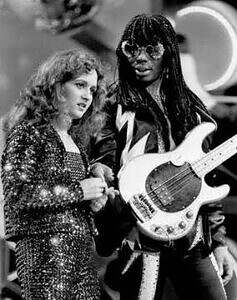
Rick James and protege Teena Marie
Jill Jones in 1982, around the time she joined Prince's band
Prince first met Jill Jones on the “Prince” tour of 1980, when he opened for Rick James on his “Fire it Up” tour.Jill Jones, 16 years old at the time, was a backing singer for Teena Marie, Rick James’ protégé.
Prince and Jill Jones crossed paths again almost a year later on the “Dirty Mind” tour, when Teena Marie, opened for Prince on the tour.
Prince contacted Jill in March of 1982 at the end of the “Controversy” tour, to ask her to sing back-up on his new album that he would be recording in Los Angeles. Jill was “19” years old by now, and she accepted Prince’s offer to leave Cincinnati Ohio and come record with him in L.A.
Prince’s escape to L.A. in early 1982 to record the “1999” album came at a good time, considering the new relationship between Prince and Denise Matthews had quickly become rocky and volatile. Jill speaking about this time in 1982, that she spent with Prince in Los Angeles, says she felt “they were best friends”, and that “she was a refuge for Prince from the pain of his break-up with Susan, and from the violent drama his relationship with Denise had become”.
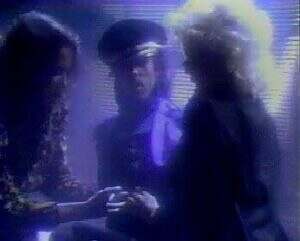
Prince, Lisa Coleman, and Jill Jones, in the music video for "Automatic"
As to Prince and Denise or “Vanity”, the hot romance between them that started just a few short months ago, had grown violent, and had begun to fizzle out.
Rolling Stone cover: April 28, 1983
Vanity’s fits of anger over Prince’s other “girlfriends” made Prince feel trapped and cornered. And despite Vanity’s violent reactions, Prince continued to see Jill Jones and Susan Moonsie.
Another reason for the volatility of Prince and Denise’s relationship was childhood traumas and abuse, and Denise's addictions to drugs and alcohol.
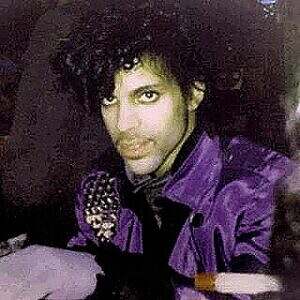
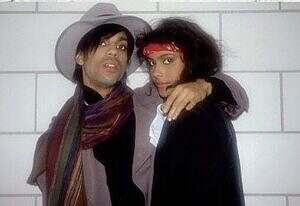
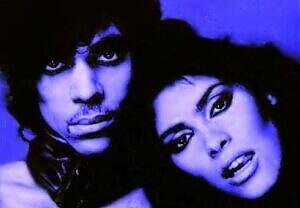
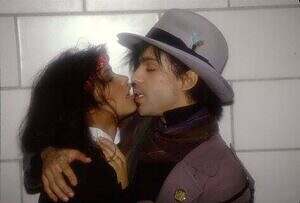
Prince and Vanity, circa 1982
Prince and Vanity, 1982 photo shoot
Prince was not the first, nor the last relationship for Denise to be destroyed by her alcoholism and drug abuse.
Vanity 6's debut album, "Vanity 6"
But eventually, the “Vanity 6” debut album was released on August 11, 1982, and would peak at #6 on the R & B chart.
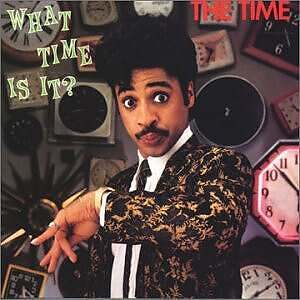
"What Time Is It?", The Time's 2nd album
"The Time"’s 2nd album, “What Time is It?” was then released a few weeks later on August 25, 1982, and also becomes a chart- topping hit.
But despite the successes, the volatile energy continues to build between Prince,The Time, Vanity 6, and Jill Jones on into the upcoming “1999” tour, aka “The Triple Threat” tour on 1982-1983.
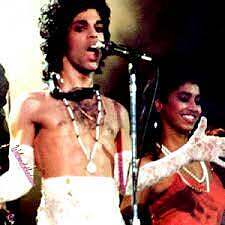
Prince and Vanity 6 on tour in 1982
We decode the “side group” album releases, and uncover more “Prince Numbers” connecting those around Prince at this time with his “Contract Ritual” with Warner Brothers Records.
We also decode the members of “Vanity 6” and Jill Jones, to see how their Gematria coding truly provides insight into their “higher roles” with Prince at this time in his life and career.
The Time, 1981
In this episode and in upcoming episodes of “The Ritualistic Life and Murder of Prince” and “Prince’s Spiritual Life and Journey” series, we dispel a lot of the false propaganda around the relationship between Prince and Denise, mostly created and promoted by Howard Bloom’s PR Firm and “The Managers”, Cavallo, Ruffalo, & Fargnoli.
Much of this “propaganda” has been spinning around for decades around this relationship, even more intensely since both Prince and Denise’s deaths in 2016.
Prince and Vanity in the 1983 "Rolling Stone" photo shoot
Spring 1982: Writing “1999” with the “Linn LM-1 Drum Computer”
In the Spring of 1982, Prince is writing songs for the "1999" album, much of which is coming to Prince, “channeled” through dreams.
In the "1999" era, Prince was receiving much of the music in dreams in the form of lyrics and sounds
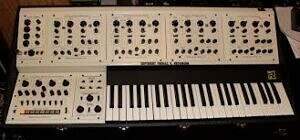
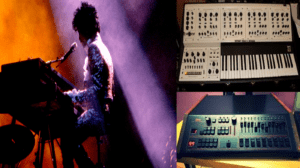
Prince used the Oberheim model synthesizer strictly in the early 80s through the "Purple Rain" era
Into the Summer of 1982, Prince has settled back into his home studio on Kiowa Trail, in Edina, MN, with his new electronic “Toy”, the "Linn LM-1 Drum Computer”, to write and record songs for a double album. He would also be recording demos for the side groups using primarily the drum computer and Oberheim synthesizers.
You see, using the drum computer and other electronic programming tools, Prince could record around the clock, not needing to call in band members to record their tracks.
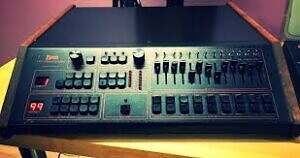
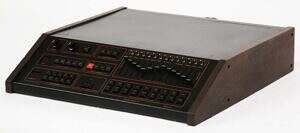
Prince used a "prototype" of the "Linn LM 1 Drum Computer" to create his signature sound starting in the "1999" era, and used this same machine for the rest of his career
The Linn LM-1 Drum Computer that Prince started using on the “Controversy” album, has become an obsession, and has completely changed the way Prince gets ideas for and makes his music.
OUTTAKE: "Prince, The LM-1 Drum Computer, and the 1984 Agenda"
We talked about in the series OUTTAKE, “OUTTAKE: Prince, The LM-1 Drum Computer and the 1984 Agenda”, how Prince owned one of few “prototype” models of Roger Linn”s “LM-1 Drum Computer”, and he held onto and used that original “prototype” for over 35 years, to create the “Minneapolis sound”.
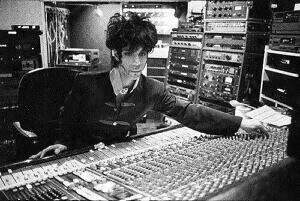
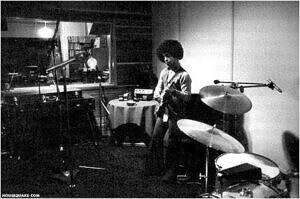
Prince in his home studio in 1993
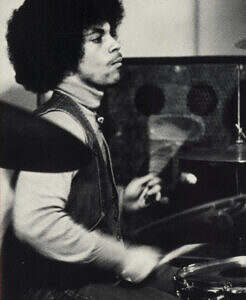
Prince on drums, recording his debut album, 1978
Prince recording his debut album "For You" in 1977
Prince liked the original “prototype" of the “LM-1”, because it had features that “newer models” of the “LM-1” didn’t have.
The “prototype” had multiple specialized “inputs”, where Prince could “run other instruments through” the drum computer, creating new and unique “instruments” and sounds.
But it is most important to note here, that The Linn LM-1 Drum Computer changed the way Prince got ideas for songs.
Roger Linn's Lm-1 Drum Computer developed in 1981
Before being introduced to the Linn LM-1 Drum Computer, Prince would hear a piece of music: a drum beat, a guitar lick, a baseline, and he would write the rest of the song, adding instrument parts.
But Prince’s process changed after he began using the drum computer. Prince began to hear sounds in his head, and then he would go straight to the Linn LM-1 to recreate the sound he heard.
Prince didn’t think in terms of song or instruments anymore, but in terms of sounds and sound parts in composing a song.
Through this mastery of the “energetic workings” of the “Linn LM-1 Drum Computer”, it becomes a mind control tool for Prince, aiding in the embedding of symbols, messages, and triggers into Prince's psyche and into the music he creates with it.
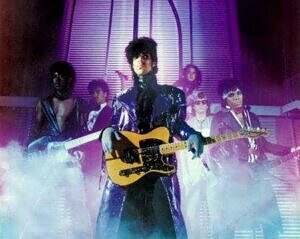
Prince "1999" video shoot
Prince also began turning towards the Oberheim synthesizers, ”layering” synths as a backdrop to the sounds created through the Linn LM-1 Drum Computer. This drum machine-synthesizer “layering” became a lynchpin of the “1999” album, the side groups records, and virtually every song Prince wrote in this era.
The Role of Sound and Studio Engineers
Also in this episode, we start to talk about the role of the “Sound Engineer” in the “mind control” and “programming” of artists. Many times, the studio engineer works for the record label, that is paying for and overseeing the artists studio and recording time.
In the series, we talk about a few of Prince’s “long-term” studio engineers all through these 1st “19” years of Prince’s life in the music business, starting with Peggy McCreary or “Mac” as she was called. Peggy was the sound engineer on the “Controversy” album released the year before, so she was a natural choice for this new album.
Susan Rogers, former Prince studio engineer
Peggy "Mac" McCreary, former Prince sound engineer
The “1999” album: Musical and Spiritual turning point for Prince
"1999", Prince (1982)
The ”1999” album proved to be one of the most “experimental” albums of the day. And the truly innovative songwriting and production of the record is what made ‘1999”’ so different from any of the other music out at the time.
All through the Spring of 1982, as Prince is writing and recording the “1999” album, Prince was writing songs from lyrics, images, sounds, and music he got from his “dreams”. This is because Prince was at a turning point in his spiritual path and work in this life and being prepared for further truth and guidance about his life and career.
We discuss the rigorous “1999” recording sessions, mostly taking place in April of 1982, and the “ritualistic” nature of the process of album recording and “mastering”.